Platinum
Platinum is a chemical element with symbol Pt and atomic number 78.
Catalytic Converter
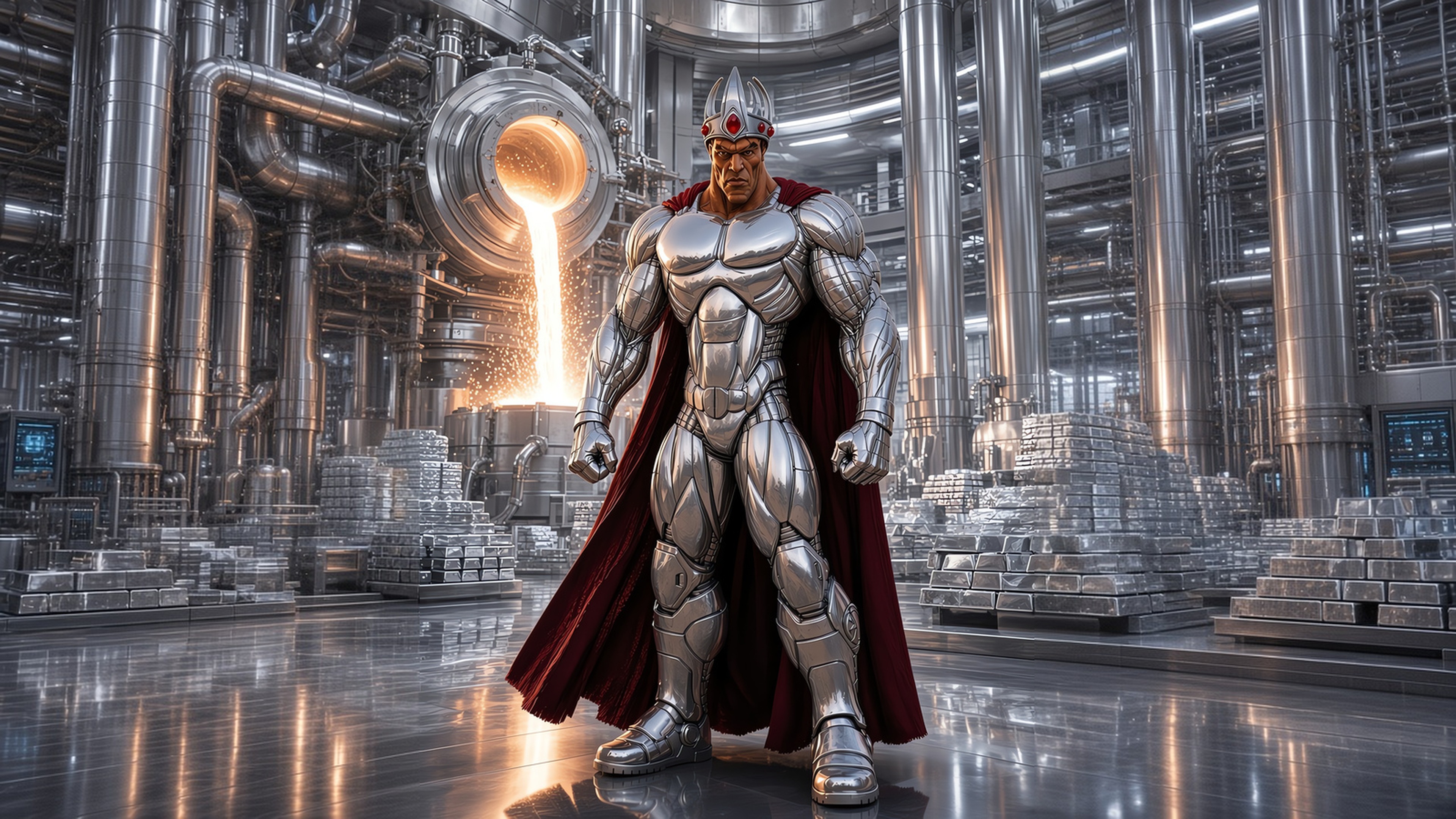
The caped Platinum turns the opponent's own energy against them. Like platinum in a catalytic converter, he speeds up the reaction without ever being consumed, then splashes them with molten noble metal.
From the Periodic Table Kings files
Written by Terrence Oneal for the original Periodic Table Kings pages.
Platinum is a precious metal; soft, silvery-white, and dense with a beautiful lustrous sheen. It is one of the of the six platinum group metals consisting of platinum, palladium, rhodium, osmium, iridium and ruthenium. Platinum is considered to be non-toxic.
Platinum is malleable and ductile and has a high melting point. It does not oxidize in air even at high temperatures and is unaffected by common acids.
Platinum dissolves in aqua regia (mixture of nitric acid and hydrochloric acid in the ratio 1:3) forming chloroplatinic acid (H2PtCl6). It is also corroded by halogens, cyanides, sulfur, and caustic alkalis.
The element name comes from the Spanish word ‘platina’ meaning little silver. An alloy of platinum and cobalt is used to produce strong permanent magnets.
Platinum is widely used as a catalyst for chemical reactions. The most important use of platinum is in vehicles, as a catalytic converter, facilitating the complete combustion of unburned hydrocarbon passing through the exhaust. Platinum is used in jewelry, decoration and dental work. The metal and its alloys are also used for electrical contacts, fine resistance wires and medical / laboratory instruments.
Artwork 1