Neon
Neon is a chemical element with symbol Ne and atomic number 10.
Story scene
Neon — City of Light
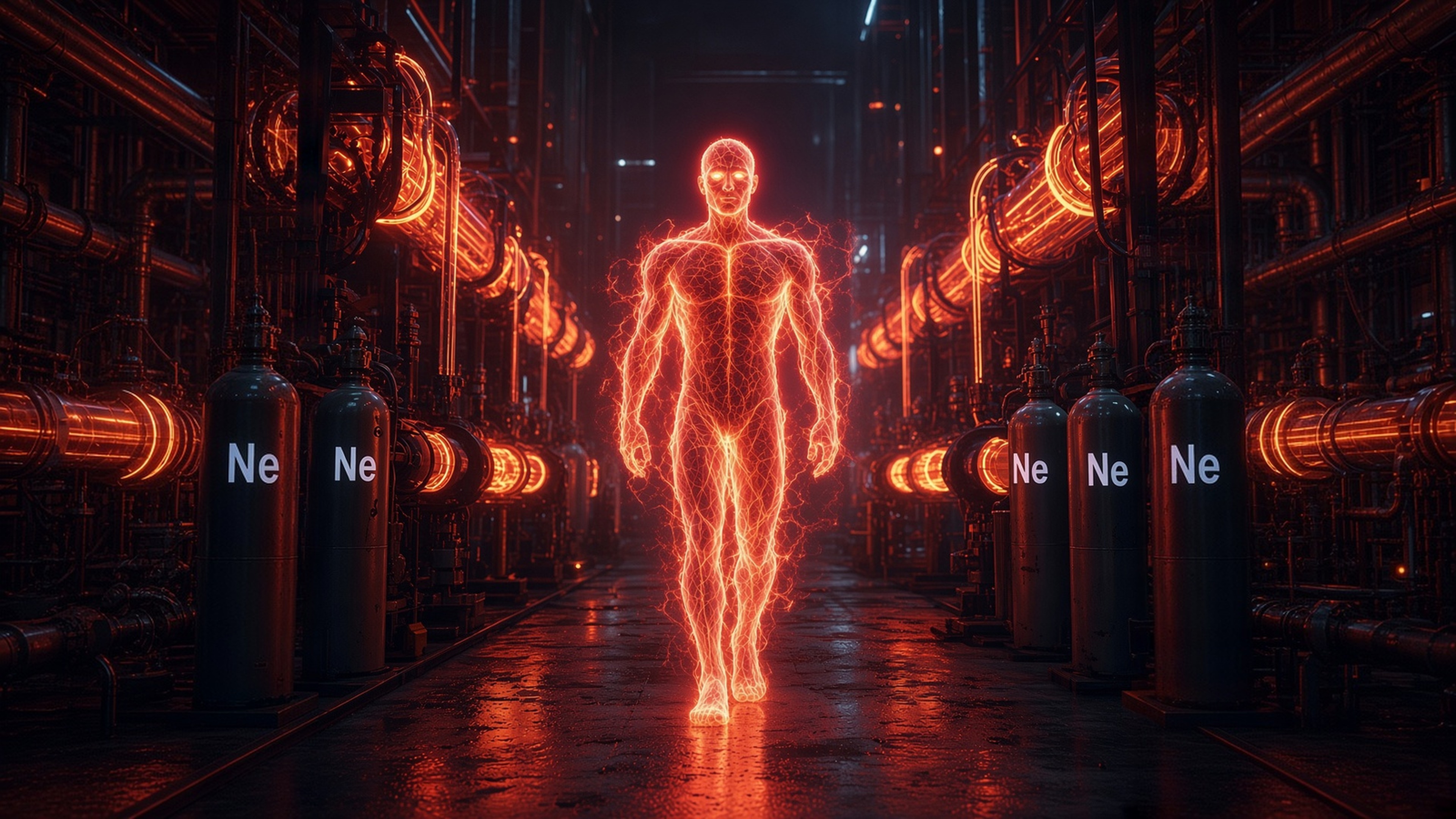
Neon floats as glowing ionized neon gas above a ruined metropolis. His eyes ignite and he raises a new neon-lit city.
The science behind the story: real neon is an inert noble gas that glows red-orange when electrically ionized. The character floating as ionized gas above a ruined metropolis and raising a new neon-lit city is fiction.
From the Periodic Table Kings files
Written by Terrence Oneal for the original Periodic Table Kings pages.
At room temperature and pressure, neon is an odorless, colorless, diamagnetic gas. It belongs to the noble gas element group and shares the property with other elements of that group of being nearly inert (not very reactive).
Neon is both rare and abundant, depending on where you're looking for it. Even though it's rare and expensive on Earth, there is a fair amount of neon in the average home. If you could extract all the neon from a new home in the United States, you would have about 10 liters of the gas. Although neon is a rare gas in the Earth's atmosphere (about 0.0018 percent by mass), it is the fifth most abundant element in the universe (one part per 750), where it is produced during the alpha process in stars.
The sole source of neon is from extraction from liquefied air. Neon is also found in diamonds and some volcanic vents. Because neon is rare in air, it's an expensive gas to produce, about 55 times more expensive than liquid helium.
One of the more interesting facts about neon is that the light emitted from ionized neon can pass through water fog. This is why neon lighting is used in cold regions and for aircraft and airports.
Artwork 1