Nitrogen
Nitrogen is a chemical element with symbol N and atomic number 7.
Story scene
Nitrogen — Frost Legion
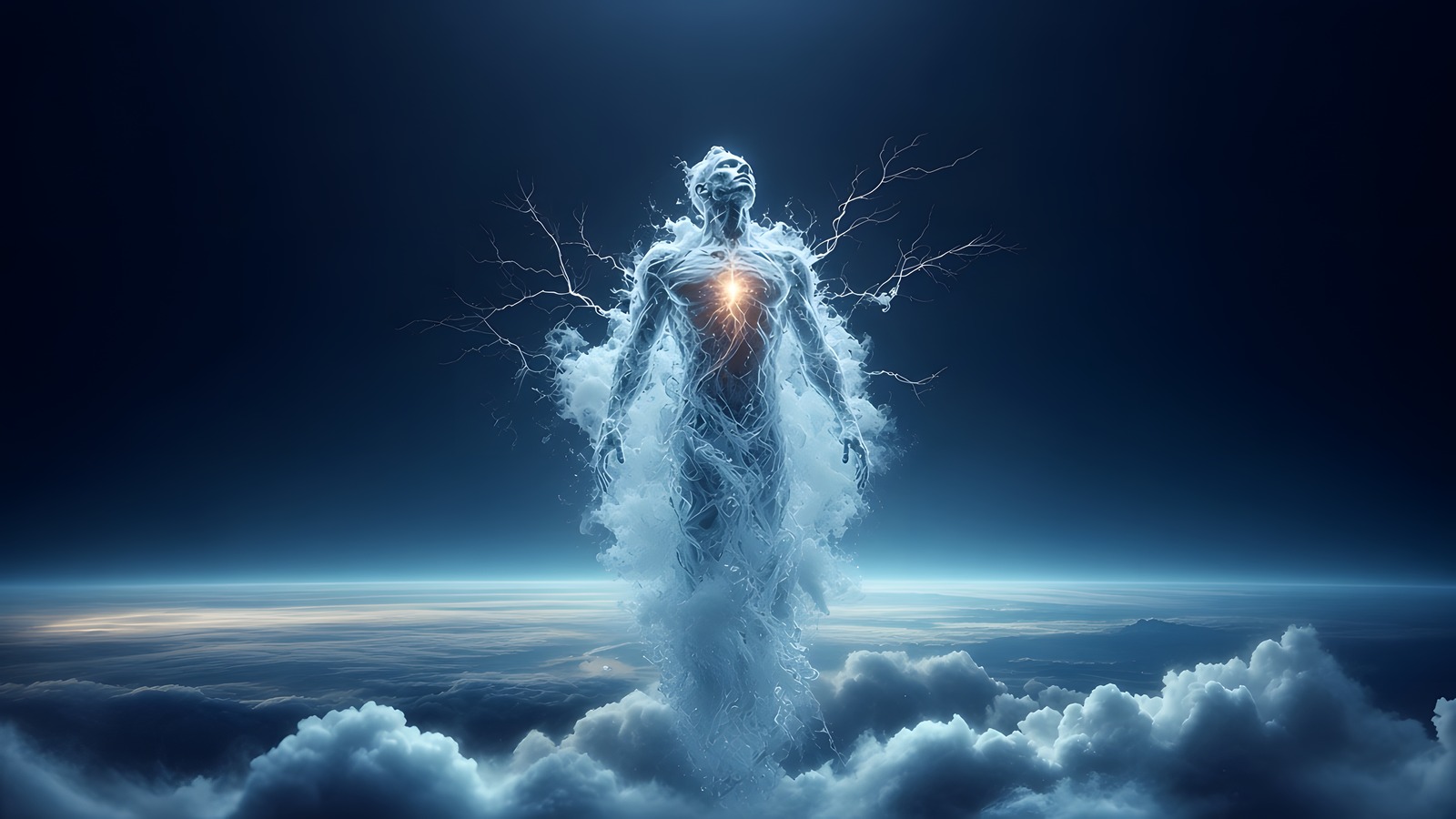
Nitrogen, a blue mist-and-lightning being with a glowing orange core, floats above the clouds at the edge of space. He yells and throws his arms wide. A beam of light shines down, and an army of icy, glowing-blue soldiers with swords and shields rises from the clouds.
The science behind the story: real nitrogen makes up about 78% of Earth's air, and liquid nitrogen boils at about -196 °C, cold enough to freeze almost anything it touches. The legion of frost soldiers rising from the clouds is fiction.
From the Periodic Table Kings files
Written by Terrence Oneal for the original Periodic Table Kings pages.
Nitrogen is an important part of our bodies. Amino acids all contain nitrogen and these are the building blocks that make up the proteins in your hair, muscles, skin and other important tissues.
We cannot survive without nitrogen in our diet – we get it in the form of protein.
Basically, when we breathe in, we breathe in oxygen together with nitrogen and other constituents of air as well. So, the amount of nitrogen we breathe is exhaled out and not absorbed by our body unlike oxygen which our body needs. If our body will also absorb nitrogen then, it will get rid of carbon dioxide.
Nitrogen is a colorless, odorless, tasteless, diatomic and generally inert gas at standard temperature and pressure. It is the fourth most abundant element in the human body. Many of the molecules of life contain nitrogen. At atmospheric pressure, nitrogen is liquid between 63 K and 77 K. In the natural world, the nitrogen cycle is of crucial importance to living organisms. About 2.5 percent of the weight of living organisms comes from nitrogen in organic molecules.
Nitrogen is taken from the atmosphere and converted to nitrates through lightning storms and nitrogen fixing bacteria. The nitrates fertilize plant growth where the nitrogen becomes bound in amino acids, DNA and proteins. It can then be eaten by animals. Eventually the nitrogen from the plants and animals returns to the soil and atmosphere and the cycle repeats.
Nitrogen is used to produce ammonia (Haber process) and fertilizers, vital for current food production methods. It is also used to manufacture nitric acid (Ostwald process). Liquid nitrogen is used as a refrigerant.
Nitrogen is non-toxic under normal conditions. Direct skin contact with liquid nitrogen causes severe frostbite. Decompression in divers or astronauts can cause the ‘bends’ – a potentially fatal condition when nitrogen bubbles form in the bloodstream.
While elemental nitrogen is not very reactive, many of nitrogen’s compounds are unstable. Explosives that are nitrogen-based are incredibly volatile due to the stability of nitrogen in its diatomic state, N 2. Most organic explosives are explosive because they contain nitrogen. They are defined as nitro compounds. The nitrogen compound nitroglycerin can be used for relief of angina, a life threatening heart condition.
Artwork 1