Oxygen
Oxygen is a chemical element with symbol O and atomic number 8.
Story scene
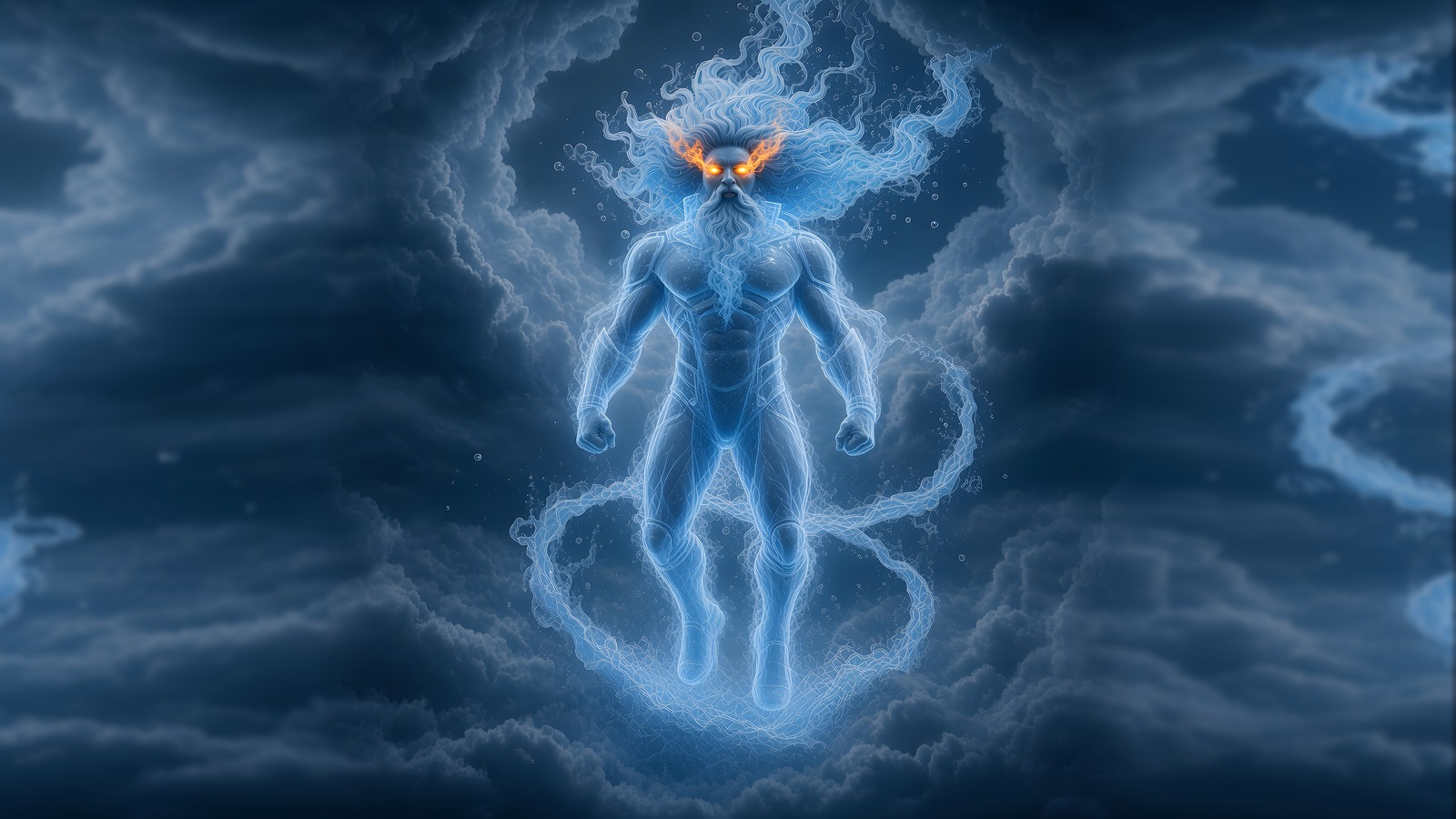
Oxygen — Fiery Wrath
Oxygen, a blue plasma-energy being with fiery orange eyes and a flaming mane, floats over a futuristic city. He lowers his arms, and fires and explosions ignite across the skyscrapers. The scene ends with him floating amid the burning city.
The science behind the story: real oxygen makes up about 21% of Earth's air. It does not burn by itself, but it is what lets fires burn. The character firing beams and igniting a city is fiction.
From the Periodic Table Kings files
Written by Terrence Oneal for the original Periodic Table Kings pages.
Oxygen is first absorbed by the blood as it passes through the lungs, binding to a special protein called hemoglobin contained within red blood cells. Now tied to hemoglobin, oxygen is pumped by the heart through the vascular system to the rest of the body. The oxygen is then released into the cells where it is used in the breakdown of molecules to create needed energy.
Oxygen in its common form (O2) is a colorless, odorless and tasteless diatomic gas. Oxygen dissolves more readily in cold water than warm water. As a result of this, our planet’s cool, polar oceans are more dense with life than the warmer, tropical oceans.The reaction with oxygen is one of the criteria we use to distinguish between metals (these form basic oxides) and non-metals (these form acidic oxides).
The major commercial use of oxygen is in steel production. Carbon impurities are removed from steel by reaction with oxygen to form carbon dioxide gas. Oxygen is also used in oxyacetylene welding, as an oxidant for rocket fuel, and in methanol and ethylene oxide production. Ozone (O3), another form (allotrope) of oxygen, occurs naturally in the Earth’s upper atmosphere. It is made by the action of ultraviolet light on O2. Ozone shields us from much of the harmful ultraviolet radiation coming from the sun. In Earth’s early atmosphere, before oxygen and hence ozone levels were sufficiently high, the ultraviolet radiation reaching our planet’s surface would have been lethal to many organisms.
O2 is non-toxic under normal conditions. Plants and animals rely on oxygen for respiration. Pure oxygen is frequently used to help breathing in patients with respiratory ailments.
The word oxygen is derived from the Greek words ‘oxys’ meaning acid and ‘genes’ meaning forming. Oxygen is extremely reactive and forms oxides with nearly all other elements except noble gases. Exposure to oxygen at higher than normal pressures, e.g. scuba divers, can lead to convulsions. Ozone (O3) is toxic and if inhaled can damage the lungs.
Artwork 1